
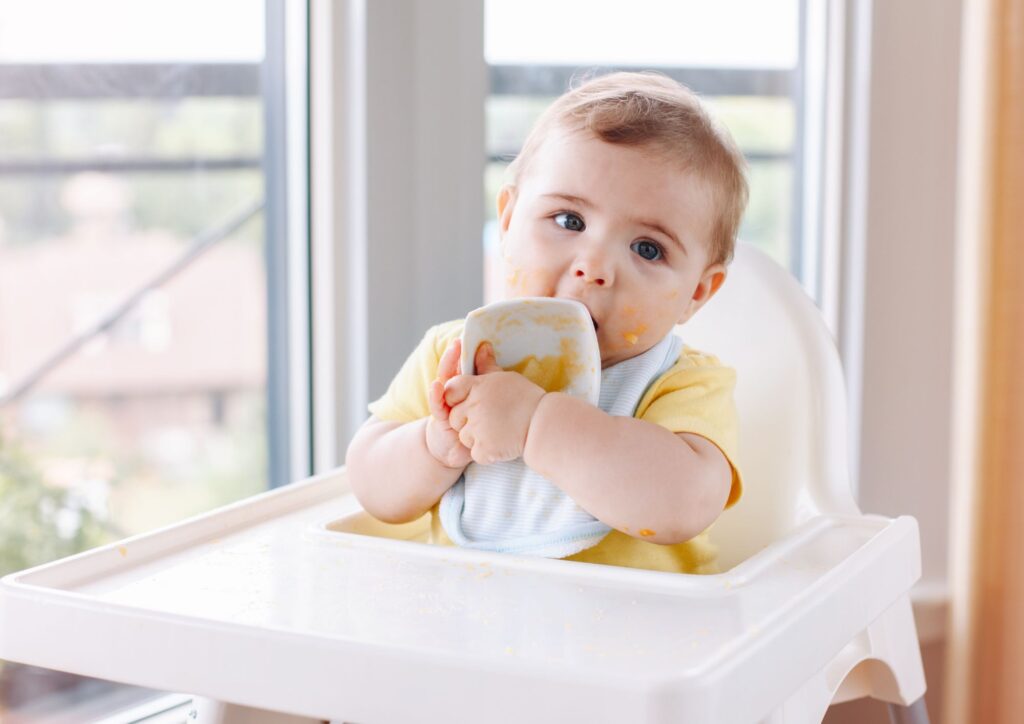

The move from breast milk or formula to complementary feeding is an exciting milestone in your baby’s development.
To approach this stage, when your little one starts exploring new flavours and textures, patience and, above all, knowledge are essential. That is why, in this post with an introduction and tips on complementary feeding, we give you some practical pointers and suggestions to make your baby’s first meals easier.
Watch for signs of readiness: Before you start complementary feeding, make sure your baby is ready. Signs such as being able to hold their head up and showing interest in food are key indicators.
Introduce one food at a time: Start with a single food for several days before introducing another. This will help you spot possible allergies or intolerances.
The right consistency: Start with smooth, thick purées, gradually moving on to more textured foods as your baby gets used to them.
Encourage them to join in: As your baby develops their motor skills, encourage them to touch and explore their food. This not only stimulates their development but also creates a positive experience around eating.
Remember that every baby is unique, and the introduction of solid foods can vary. Complementary feeding is not only an essential step for physical growth, but also an opportunity to stimulate the senses and develop a positive relationship with food.
On our Instagram profile you will find a guide to complementary feeding based on your little one’s age. Don’t miss it!