

The arrival of a new member of the family is an exciting time, but it can also be a challenge. One of the most common questions parents face is how to treat cradle cap in babies effectively. This skin condition, although harmless, can be uncomfortable for both the baby and the parents. In this blog, we give you a complete guide on how to treat it, along with tips and solutions.
What is cradle cap?
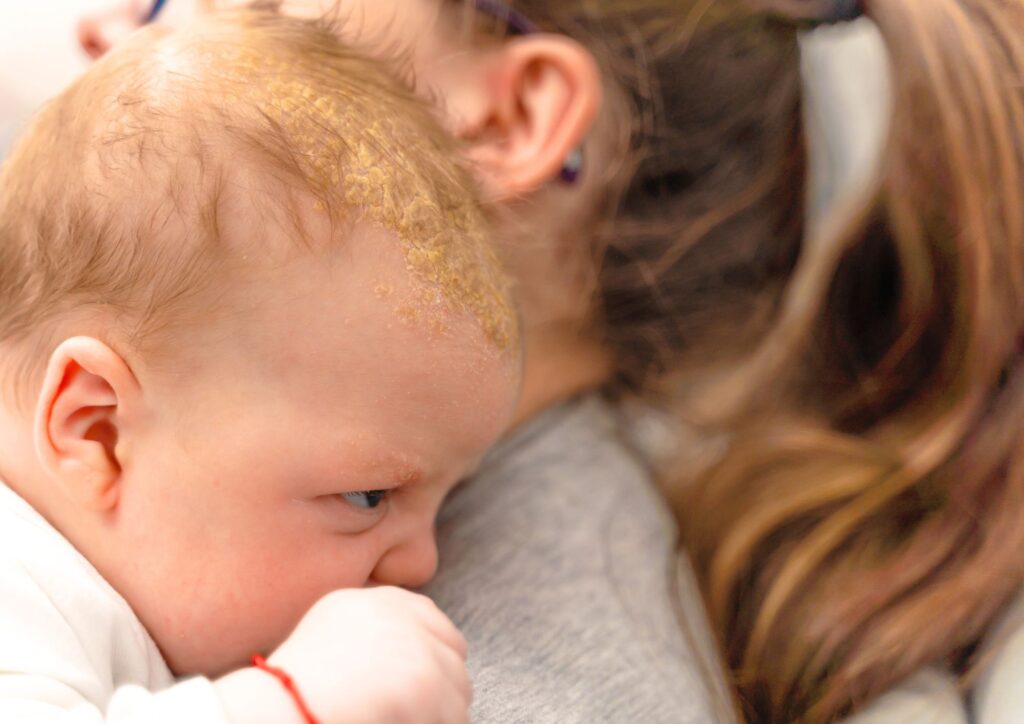
Cradle cap, technically known as infantile seborrhoeic dermatitis, is a common skin condition that affects many newborn babies. It shows up as greasy, yellowish, flaky scales on the baby’s scalp. Although it may look worrying, cradle cap is not a serious or contagious disease. This condition is caused by excess sebum production in the baby’s sebaceous glands and usually clears up on its own within a few weeks or months.
Symptoms and diagnosis
1. Scales on the scalp
The most obvious symptom of cradle cap is greasy scales on the baby’s scalp. These scales can vary in size and may come with redness.
2. Itching and irritation
Some babies may have itching or irritation in the affected area, which can make them rub or scratch their scalp.
3. Diagnosis by a health professional
If you are not sure whether your baby has cradle cap, it is important to see a health professional. The doctor will be able to diagnose the condition based on the symptoms and the appearance of the scales on the scalp.
Tips for managing cradle cap
Now that you understand cradle cap better, here are some effective tips for treating it properly:
1. Moisturising. Keep your baby’s scalp moisturised. You can apply a gentle vegetable oil, such as almond oil, to the scales before bathing your baby. Then use a mild baby shampoo to wash their hair.
2. Gentle brushing. Use a soft baby brush or a fine-toothed comb to gently remove the scales from the scalp. Use gentle movements to avoid irritating your baby’s skin.
3. Gentle baths. Avoid bathing your baby in very hot water, as this can make cradle cap worse. Choose lukewarm water and a mild baby shampoo.
4. Stop your baby scratching. Keep your baby’s nails short and filed so they cannot scratch and make the irritation worse.
Cradle cap can be a worry for parents, but it is important to remember that it is a common and usually harmless condition. By following these tips and keeping up proper care, you can treat it effectively. Remember that, if in doubt, you can always ask a health professional for further guidance.